Bok svima!
My name is Grace R. Reynolds. I am an author of dark fiction and poetry. Family and ancestral heritage is very important to me. As some of you may have gathered from the title of this post and Substack, I have Croatian roots.
As an author that predominantly writes horror fiction, I have connected with fantastic authors of Croatian ancestry both abroad and in the homeland. Riječ i korijeni is a mini-series of interviews with authors from around the world in the Croatian diaspora as well as in Croatia proper.
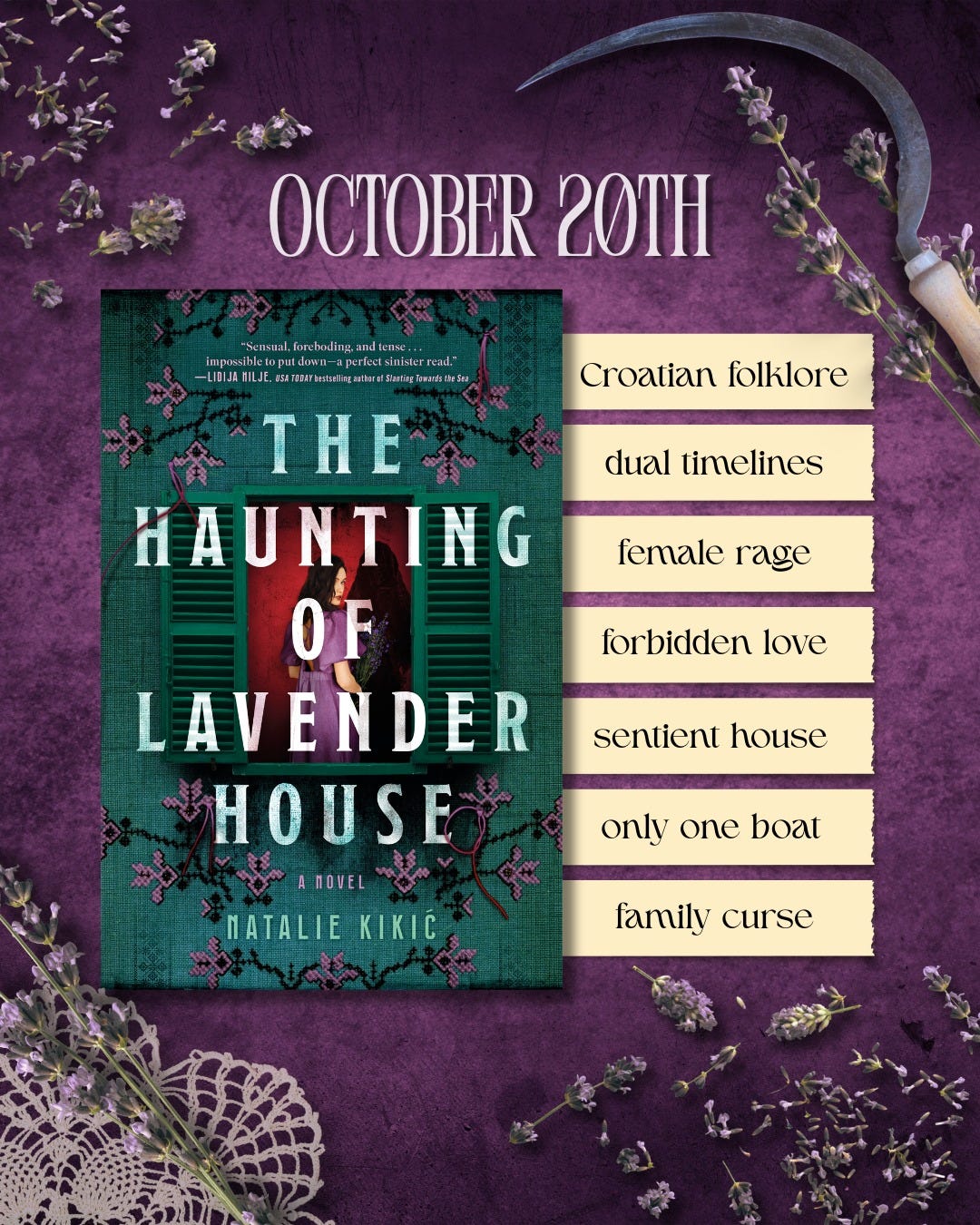
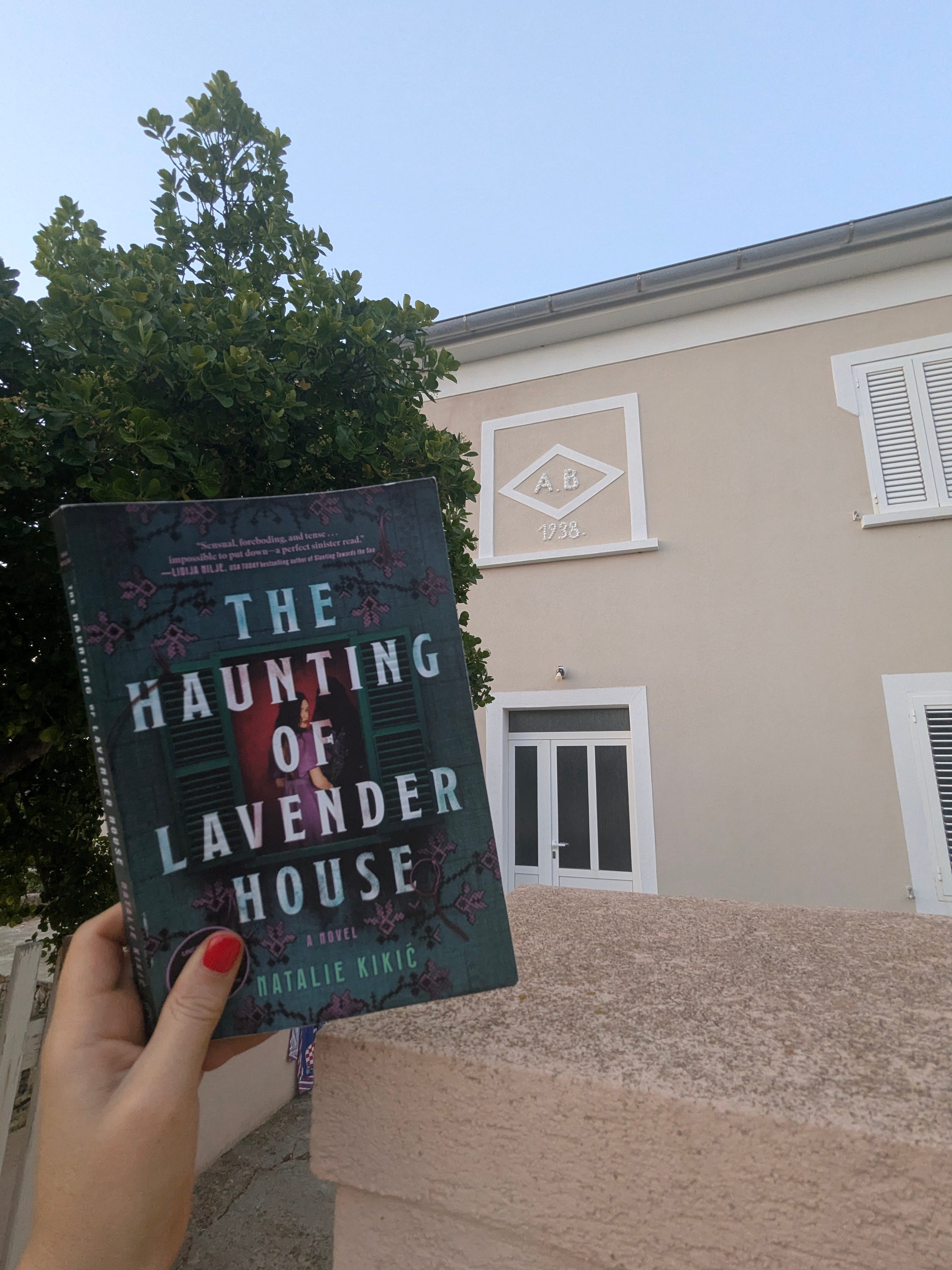
Today on the blog I chat with Natalie Kikić, author of her debut Croatian Gothic Romance The Haunting of Lavender House.
Grace: Bok Natalie! Welcome to Riječ i korijeni. Please tell our readers a little about yourself.
Natalie: Bok Grace! Thank you so much for having me! I am so excited about this series, and honored to be a guest.
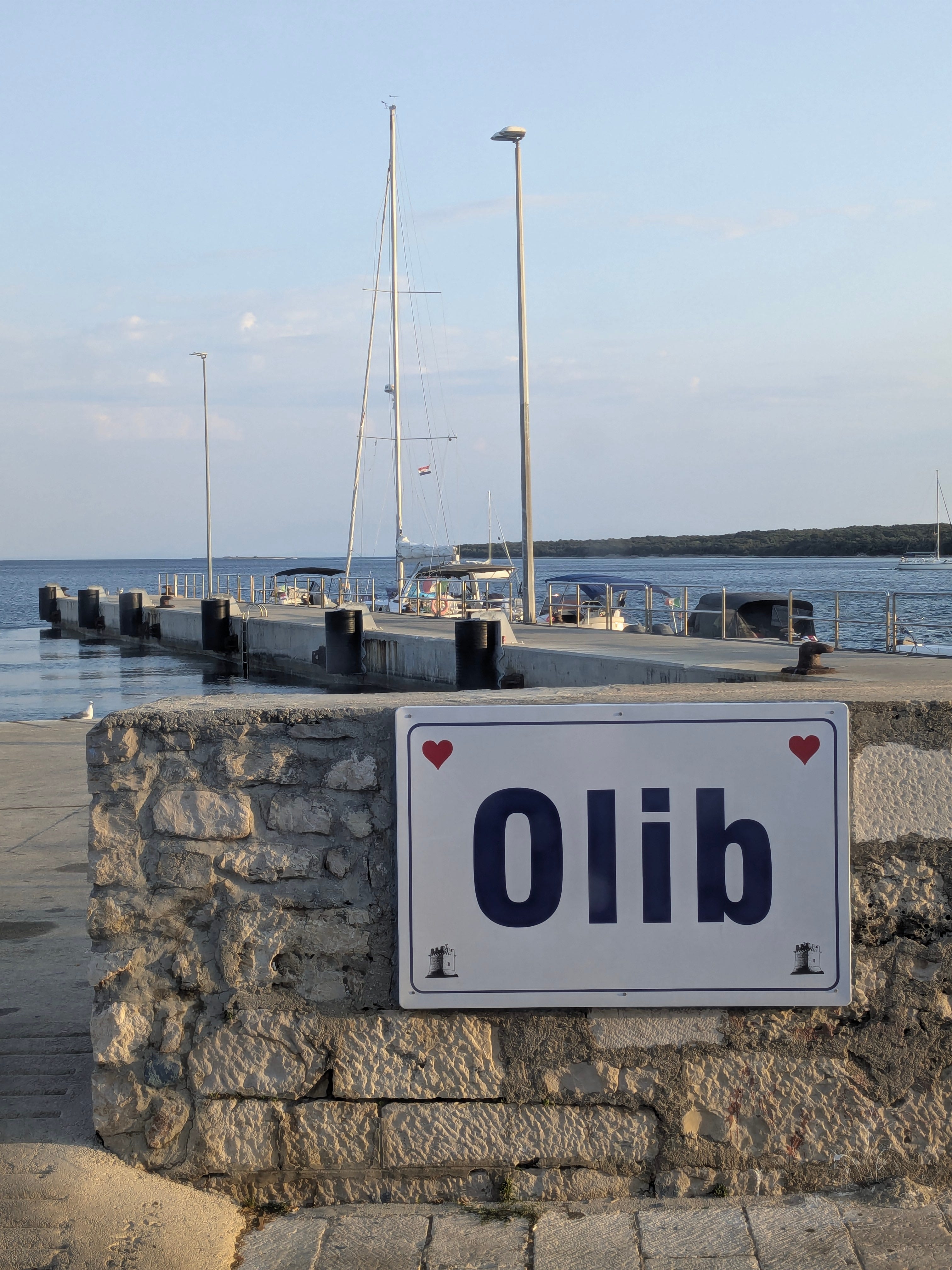
Hi everyone! I’m Natalie, the author of the Gothic Horror-Romance, The Haunting of Lavender House. My parents are both Croatian—my dad is from the island of Olib (near Zadar) and my mom is Croatian-Albanian, though she grew up in Kosovo. Growing up on their stories of life in Yugoslavia inspired me to explore my heritage more, and it has also inspired my writing, hence my debut novel. In general, I love exploring Balkan folklore, belonging, and hauntings, both ghostly and romantic.
When not writing, I can typically be found wrapped in a blanket with a cup of chai, meticulously planning my next travel itinerary, or listening to Taylor Swift on repeat. I am a dual Canadian-US citizen and I currently live in New England with my husband and two ginger, polydactyl cats.
[G]: I am so excited to dive into a discussion about your debut novel, The Haunting of Lavender House. Without giving too much away, what inspired this story?
[N]: Even though both my parents are Croatian, I’ve never really felt like I belonged within my own heritage. I think this is largely due to the fact they didn’t teach me how to speak the language (though I study it on my own). So, first and foremost, I was really inspired to write about a Croatian-American character who, like me, also felt like she didn’t belong in her parents’ homeland. In the story, the protagonist travels to her family’s ancestral home—Lavender House—which is inspired by my family’s home on the island of Olib.
As I worked on the story, I began researching Croatian folklore, and that’s when I came upon the idea of a sinister spirit called a mora, that causes nightmares and sleep paralysis. Several cultures have superstitions about this kind of spirit, and in Croatian folklore, this spirit takes the form of a young beautiful woman. But what I found most interesting was the origins of this superstition; stories about moras were typically spread in traditional, patriarchal communities, and the label of a mora was often given to young women who defied social norms in some way. For example, she was too promiscuous, too pretty, or simply someone a man wanted to push away and ostracize. I was really fascinated by that, and also thought it was a bit unfair, so I wanted to include a mora in THOLH, but also explore the idea of who really is a monster when you’re not the one in control of the narrative.
[G]: You set the story on the fictional island of Tolba. What is it about the Dalmatian coast that lends itself to telling a Gothic Romance?
[N]: This is such a great question. In a way, the Dalmatian coast is sort of the opposite of what you might expect in a traditional gothic novel. Typically, people might expect a dark, desolate landscape, like a crumbling castle, foggy lighthouse, secluded old manor… and so at first I was a bit hesitant about the gothic-ness of my story. But then I read She is a Haunting by Trang Thanh Tran, which is a gothic horror novel set in Vietnam, and I realized, that a summery, almost idyllic setting can certainly be gothic too, if you lean into the right elements.
The thing that makes a gothic story come alive is atmosphere, and the Dalmatian coast has plenty of that. I remember being distinctly inspired by an interview I read by Antoneta Alamat Kusijanović, the director of the film, Murina (which is an excellent Croatian movie, gothic in its own way); she said she wanted the characters to feel like there was nowhere to hide in the blazing sun, “like raw meat simmering in the sun.” So I definitely used heat as an oppressive element, and counteracted that with the strangeness of suddenly feeling frigid cold when the mora is around.
Another gothic element of the Dalmatian coast is the way the past really lingers there, especially on the islands. As an island, they are naturally a bit isolated from the rest of the world. Whenever I’m on my dad’s home island of Olib, I can feel the history all around—in the old monuments and churches, in my family’s home, in the dry-stone walls that line all the roads, built by hand.
With all that isolation and lingering history also comes superstition. In The Haunting of Lavender House, there is a horseshoe above the front door of Lavender House, which is believed to ward off evil creatures like witches or moras; I actually got that detail from a book about Olib by Lovro Ivin.
The isolation of an island also lends itself well to a sense of dread and oppression. When the protagonist of THOLH hears rumors her family has been cursed by a mora, she feels distraught and alone, like everyone is judging her even more. This blended really well with her general sense of not belonging.
[G]: Your main character, Petra, visits Tolba to connect with her ancestral homeland and a family she’s never known. How much, if any, of your own experiences as part of the Croatian diaspora did you draw from when constructing Petra’s character?
[N]: As I mentioned, Petra shares a lot of my own feelings of not belonging. There is a part early on in the book where Petra’s grandmother, Karmela, realizes that Petra can’t speak Croatian well. She asks, “You don’t know our language?”
Our language—naš jezik—is a common way Croatians refer to their native language, and I’ve always had mixed feelings about that term. For one, it beautifully represents a sense of connection. This is our language. But on the other side, it can feel a little othering, if you’re not fluent, like me. Even though Petra has studied Croatian, she still struggles with it, and so she thinks, “Our language will never be mine,” and that is sentiment I often feel, for better or worse.
Beyond that, Petra’s feelings of being an outsider are also very inspired by my own feelings. I didn’t visit Croatia for the first time until I was 20, even though we have family and a home there. My parents were immigrants and their focus was very much on building a life in the U.S. My sense of belonging has grown over the years, the more I visit, but it was definitely a bit jarring the first time I went. People knew who I was, they knew my family, but I felt a bit clueless and unable to communicate. I wanted to mirror that feeling with Petra.
[G]: The negative sentiments of Tolba’s residents towards Petra stem from superstitions surrounding an alleged family curse and the mora, as well as her being American. She’s never visited the island and does not speak the language well. Did you intend for the mora to represent Petra’s feelings of otherness as a part of the diaspora?
[N]: This is such an interesting take on the mora! She definitely amplifies Petra’s feelings of otherness, because not only does Petra feel insecure about her Croatian identity, but she’s also grappling with people saying she’s cursed. Not great for making friends! The more isolated Petra feels, the more powerful the mora becomes. The mora wants Petra to suffer; there’s a line I love that the mora says that hints at how trauma is often passed down: “If you really want to belong, you must suffer like the ones before you did.”
That being said, I also used Lavender House itself to highlight Petra’s otherness. The House has a POV, and it’s very distrustful of Petra from the start. Even though she’s a descendent of the builder of the house, and set to inherit it, the House doesn’t like that she doesn’t know its history and doesn’t speak the native tongue. “Imposter”, the House calls her.
[G]: How can works like The Haunting of Lavender House bridge the gap between understanding of Croatians as a global community?
[N]: One of the things that plagued me as I wrote The Haunting of Lavender House was the thought, who will care about a story set in Croatia? Compared to other countries and cultures, it felt relatively small and niche.
One of the most wonderful things I’ve experienced so far is early readers saying how much they enjoy learning about Croatian culture through my book and how much diaspora readers feel seen. It was important to me to showcase what I could about Croatia in an accessible way, so in THOLH, you’ll find various elements of Croatian culture, such as the phrase “pomalo” (take it easy), the concept of fjaka (a state of intense relaxation that’s very common along the coast), and of course, the dreaded propuh (the draft/breeze which can be considered dangerous, especially if you have two windows open on opposite sides of a room). I also tried to infuse a little more modern elements of the culture, such as the downsides of over-tourism.
Though I can’t cover everything about the culture—especially as my own perspective is limited as diaspora—I want people to come away feeling like they learned a bit about this country and its people.
[G]: Pivoting towards something every Croatian loves, let’s talk about food. Tell us how Croatian cuisine is important to shaping the setting behind The Haunting of Lavender House.
[N]: Growing up in the U.S., food was one of the main ways I was able to connect with Croatian culture, so it was important to me to feature it in THOLH. I have several mentions of Croatian food, thanks to two characters—the love interest, Luka, is a chef, while Petra’s grandma, Karmela, loves to bake.
In the story, food is used to cultivate a sense of belonging. For example, during a conversation where Petra grows closer to Karmela, they are eating kroštule that Karmela made (which my baka also often baked). And the restaurant that Luka owns is called Ko Doma, meaning “like at home.” The restaurant becomes a place of safety for Petra, especially as she wants to escape the creepy things happening in Lavender House.
[G]: Are there any recipes you’d like to learn?
[N]: I am not a great cook or baker, but I’d love to get better at breskvice—peach cookies. They look so adorable, and they’re delicious. I made them once but they looked like very sad peaches.
I would also like to learn how to make punjene paprike (stuffed peppers). My mom makes them often, and I tried myself once, but they didn’t turn out great. (Are you seeing a trend here?)
Both of these dishes are mentioned in THOLH, and I’d love to try making them again. If anyone has a great recipe for these, let me know!

[G]: What’s next for you? Are you working on any new projects?
[N]: I am! Beyond preparing to launch THOLH, I recently finished a draft of another book, which I’m really hoping will get published. All I will say is that it’s another gothic story, it’s very romantic, and it’s set in 19th century Zagreb. 😉
[G]: Are there any Croatian authors you’ve read lately?
I love supporting other Croatian authors! The most recent book I read is Slanting Towards the Sea by Lidija Hilje. It’s a gorgeously written love story set in Zadar. I also have Neon Moon by you and Bromeliad House by Jessika Grewe Glover on my TBR, and I’m very excited to read both! They seem like the perfect reads for spooky season.
[G]: (Thanks for the shout out, Natlalie!)
[G]: Thank you so much for chatting with me on Riječ i korijeni. Tell us where we can find you online!
Thank you so much for having me! Hvala lijepa!
You can find me in the following places:
Website: www.nataliekikic.com
Instagram: https://www.instagram.com/natkikicwrites/
Substack:

Facebook: https://www.facebook.com/people/Natalie-Kikic-Gothic-Author/61590218316865/
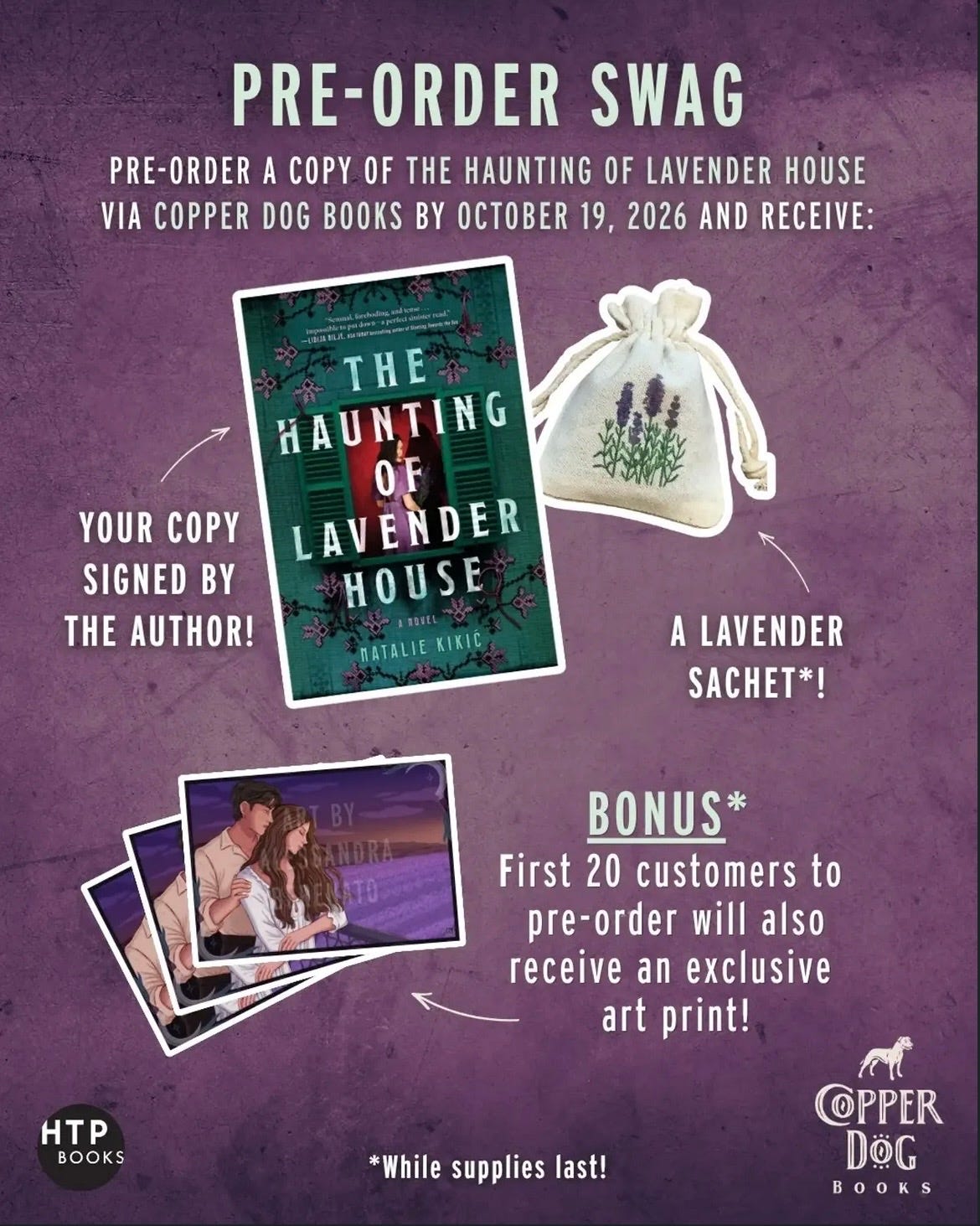
The Haunting of Lavender House comes out October 20, 2026 from Park Row Books / Harper Collins. Please consider preordering this through Copper Dog Books where you can get some swag with your order (while supplies last!), or wherever you shop for books.